
upload photo | donate | calendar
|
my profile |
register |
faq |
search upload photo | donate | calendar |
 05-24-2013, 12:40 PM
|
#5 | |
|
Lifer
Lifetime Forum Patron Join Date: Aug 2006
Location: Florida
Posts: 438
Thanks: 661
Thanked 493 Times in 219 Posts
|

Quote:
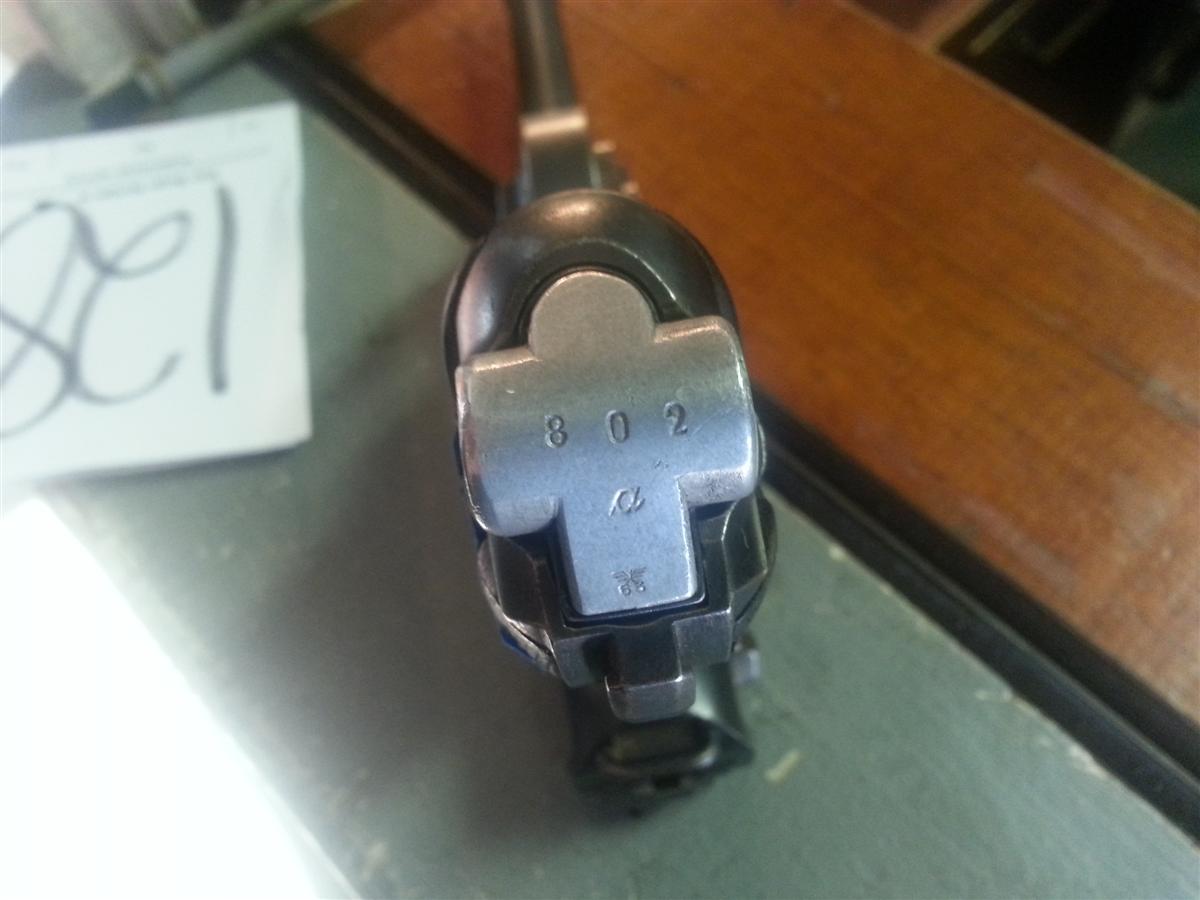
I'll try to summarize what others have told you and add some detail. 1. The G-date Luger Model P.08 refers to those guns manufactured in 1935. The G is stamped on the chamber of the gun. There is a S/42 stamped on the toggle. 2. The year 1935 was one of transition within the Inspection and approval authorities and several inspectors were assigned to the Mauser Factory. The inspection and acceptance proofs are stamped on the right side of the receiver. In fact, there are six inspector variations of the G-date military. They start with B/90 S/91, then B/90 S/92, next W/154 S/92, next 211 S/92, next Droop Eagle 63 S/92, and last Droop Eagle 63 Droop Eagle 63. The final acceptance eagle is the same on all variations and is the third mark, from left to right on the receiver. 3. Now each Luger was shipped with 2 magazines. Each magazine had the full serial number on it. Each magazine also contained B90, W154, 211, or DE63 on the bottom. These were the inspector stamps and they are the same as listed above. Additionally one of the magazines had a plus sign (+) on it indicating it was the second magazine. 4. So if a magazine has a serial number within the range of G-date manufacture, and has one of the proof marks mentioned above, it is called a G-date magazine because it was shipped with a G-date P.08, i.e. a P.08 manufactured in 1935 with a G stamped on the chamber. 5. They are hard to find because a lot of them were lost in battle in the early days of WWII especially in Russia. Second, although there were a lot of G-dates made; as pointed out above there are 6 variations so each individual variation is relatively scarce in the overall all scheme of things. Hope this helps. John |
|

|

|
| The following 2 members says Thank You to guns3545 for your post: |
|
|




 Threaded Mode