
upload photo | donate | calendar
|
my profile |
register |
faq |
search upload photo | donate | calendar |
 10-25-2024, 10:09 PM
|
#9 |
|
User
Join Date: Oct 2007
Location: Maryland
Posts: 368
Thanks: 49
Thanked 140 Times in 61 Posts
|

Okiedokie. It's time to pick up where we left off with the maintenance kits.
The body of each kit is a piece of sheet steel rolled into an oblong shape and then brazed along the seam where the two ends meet. This seam is slightly visible when the body of the kit is phosphated but invisible when painted. Below are a couple pictures of an older 1874 kit (pre-PA35) left in the white that shows the seam relatively clearly:   The slotted endcap of the tube is attached to the body by pins that are supposed to be ground flush. On older kits, those pins are steel and so well executed that they can be all but invisible but the PA 35 kits I have use gold colored pins that I'm assuming are brass and on a couple kits, they aren't so nearly so well fitted as on the older kits. A couple examples, one with visibly brass pins:  The other with pins that have been painted black along with the rest of the case: 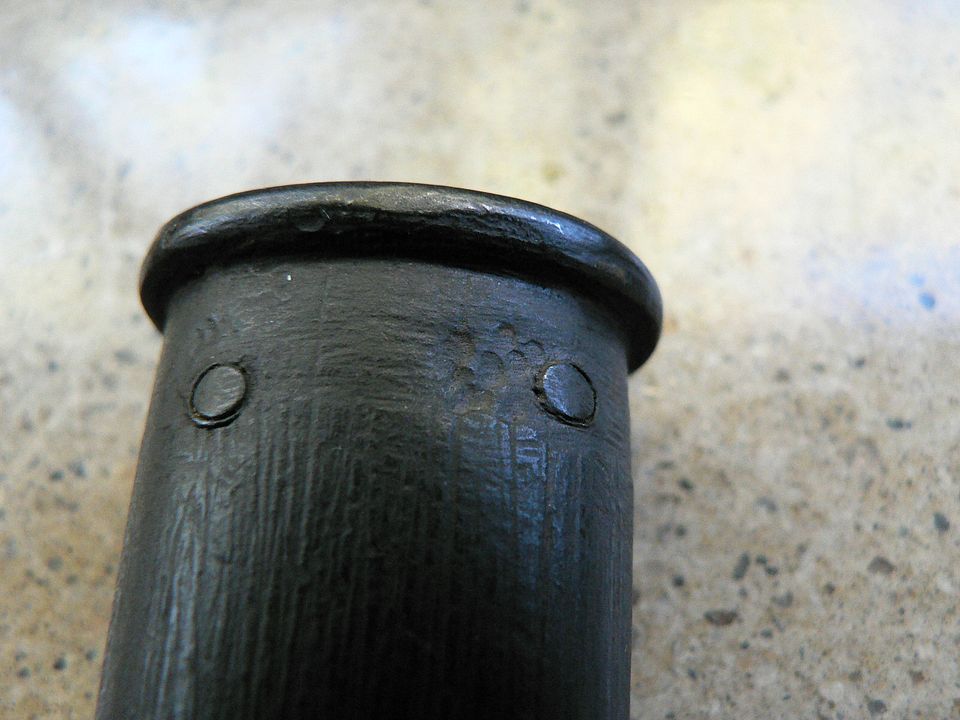 I'd like to point out at this point that the PA35 kits I have show all kinds of mixed finishes. These range from green paint to black paint, phosphate and bare steel. There is no rhyme or reason and various finishes can be found on one kit. In my limited experience, it seems that all pre-PA35 kits were either left in bare steel or had some sort of thick black coating applied. Here is an example of what I'm talking about: 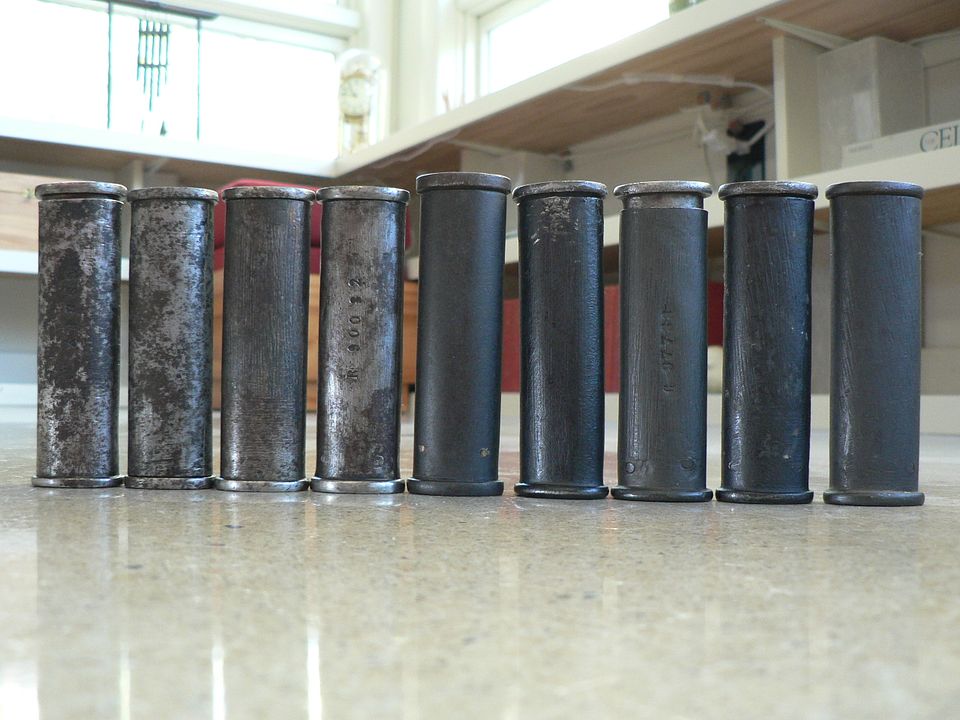 The four on the left are old 1874 kits that could be so old as to be issued with a Gras or new enough to have been issued with a MAS 36. The five on the right are PA 35 kits. Also notice that they are of varying overall lengths and the thickness of the steel on the ends varies as well. The body on one of the kits was cut too short! 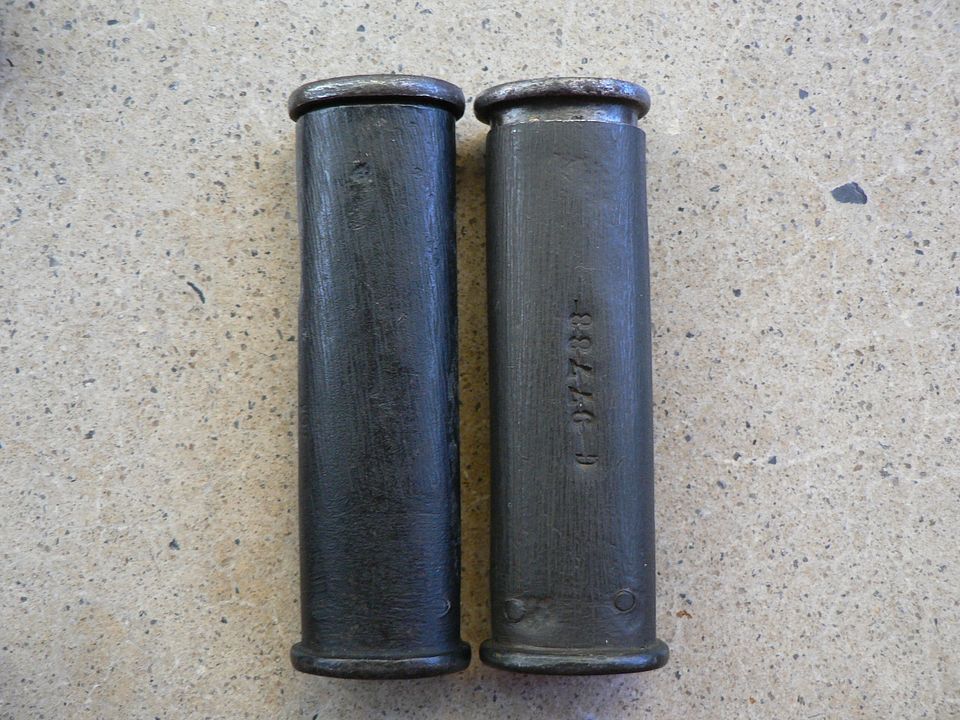 The cap still fits snugly but it won't fully seat because of the length of the tools inside. One of them was originally numbered C97788, a number that was never applied to any PA35: 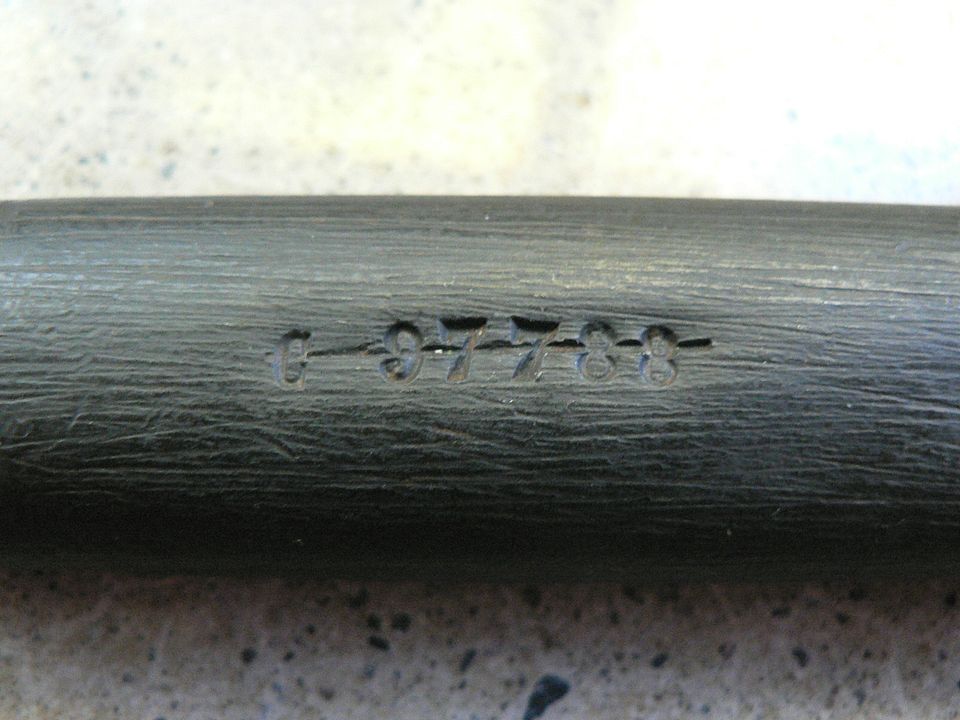 As you can see, number was crossed out, something commonly found on kits as they appear to have often been repurposed for a different firearm. What's really weird about this one is that the new number is 77633 with a prefix that appears to be an upside down "V" and a "C", a prefix that was never used on any French rifle or pistol that I am aware of. Hell if I know.....  I mentioned earlier that the slotted end of the case is designed to friction fit the screwdriver blade but I forgot to take a picture of it. So, here's a picture I used in a write up about postwar MAS 36 cleaning kits. It's a standard 1874 kit with its blade fitted so that the body of the case acts as a handle:  One last thing about the cases, something I didn't manage to get a good photo of, is the fact that all of them have wood in the bottom, cork, I think. I'm pretty sure the reason for this is to keep the parts from rattling around inside. The friction fit cap for the case is a cute little oiler: 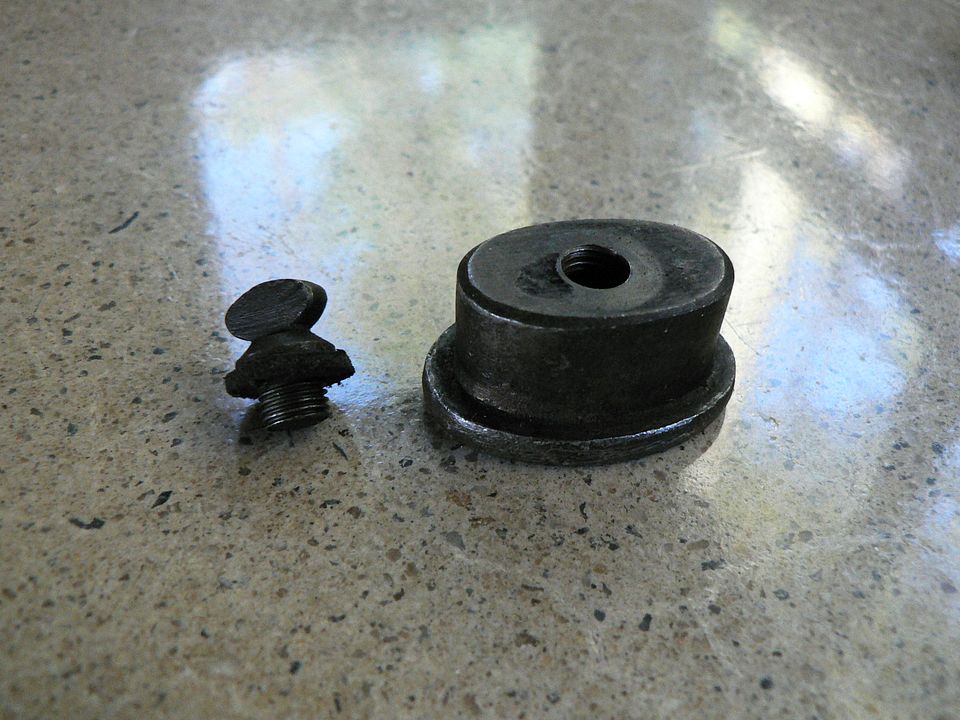 It has a finely threaded screw cap with a leather washer to prevent leakage. The fine threads and leather seal work so well that two of the five oilers still have oil inside but I think one them has an organic based oil because it STINKS! Here are the five oilers compared: 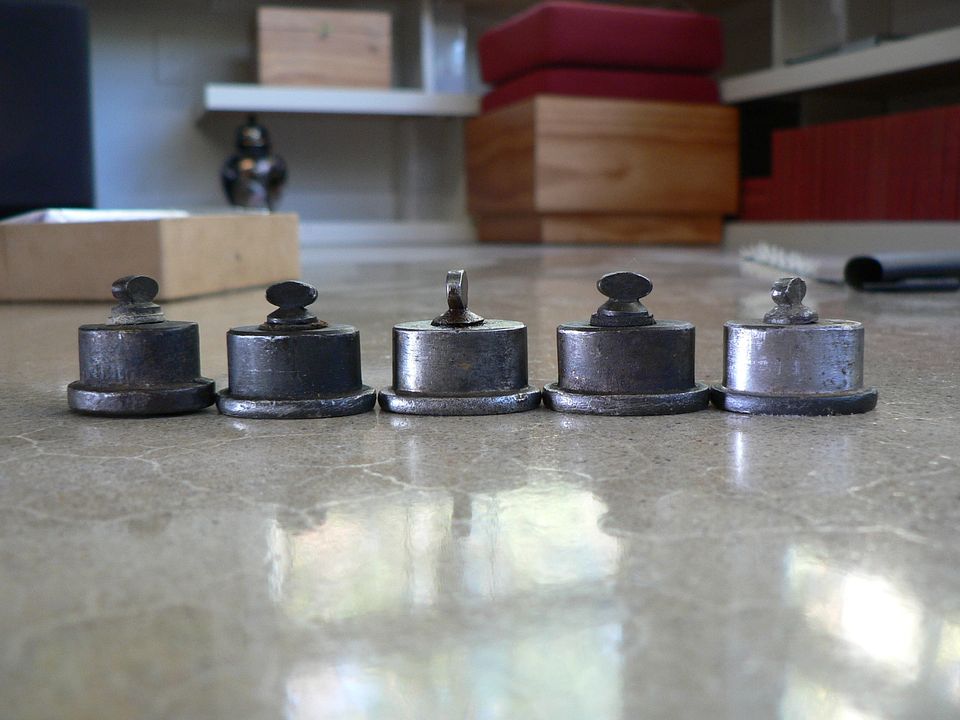 They vary from bare steel to painted to phosphate. On a couple, there are two finishes on the same bottle. The screw caps will interchange among all of them. We'll finish up with the kits in the next post by looking at the tools inside. Last edited by Wilhelm; 10-25-2024 at 11:45 PM. |

|

|
| The following member says Thank You to Wilhelm for your post: |
| Thread Tools | |
| Display Modes | |
|
|


 Threaded Mode