
upload photo | donate | calendar
|
my profile |
register |
faq |
search upload photo | donate | calendar |
 06-19-2012, 07:00 AM
|
#1 |
|
User
Join Date: Apr 2012
Location: Atlanta, GA
Posts: 293
Thanks: 112
Thanked 58 Times in 35 Posts
|
 What does ERMA stand for?
I have seen ERMA in reference to Lugers I think.
What does this stand for and what is the significance? Richard
__________________
"Für Gott, Kaiser, und Vaterland" -seeking: Erfrut Mag 1229 (no script) |

|

|
|
06-19-2012, 07:10 AM
|
#2 |
|
User
Join Date: Feb 2011
Location: Austria
Posts: 115
Thanks: 24
Thanked 59 Times in 21 Posts
|
Hello,
ERMA stands for "Erfurter Maschinenfabrik" best Otto |
|
|
|
|
06-19-2012, 04:01 PM
|
#3 |
|
User
Join Date: Apr 2012
Location: Atlanta, GA
Posts: 293
Thanks: 112
Thanked 58 Times in 35 Posts
|
Ah...mystery solved!
Is the ERMA equal to the Imperial Military Arsenal at Erfurt that manufactured weapons until 1918 for German military. Thank you so much.
__________________
"Für Gott, Kaiser, und Vaterland" -seeking: Erfrut Mag 1229 (no script) |
|
|
|
|
06-19-2012, 04:19 PM
|
#4 |
|
Moderator
2010 LugerForum Patron 
Join Date: Jun 2002
Location: Santa Teresa New Mexico just outside of the West Texas town of El Paso
Posts: 7,051
Thanks: 1,123
Thanked 5,287 Times in 1,728 Posts
|
No, ERMA is a civilian firm...Erfurt Arsenal is a government entity.
__________________
If it's made after 1918...it's a reproduction |
|
|
|
|
06-20-2012, 06:39 AM
|
#5 |
|
User
Join Date: Apr 2012
Location: Atlanta, GA
Posts: 293
Thanks: 112
Thanked 58 Times in 35 Posts
|
Ron,
I see. Anything that is ERMA is commercial. Now the punch line. Assuming all else is equal condition wise and all parts are matching where they should be, is an Erfurt Arsenal luger more or less valuable that an ERMA. Does this queston make sense. Did the dates of weapons production at both places coincide?
__________________
"Für Gott, Kaiser, und Vaterland" -seeking: Erfrut Mag 1229 (no script) |
|
|
|
|
06-20-2012, 07:17 AM
|
#6 |
|
User

Join Date: Mar 2008
Location: Marco Island, Florida
Posts: 4,867
Thanks: 1,685
Thanked 1,917 Times in 1,193 Posts
|
Erma was civilian owned but certainly a goverment contractor, so there are many Erma made products, which are military.
Erma was founded in 1922 by Berthold Geipel, so does not coincide with the Erfurt Goverment Arsenal, which ceased operations after 1918, nor did it ever make 9mm Lugers. Erma made K98 and .22 training carbines, P08 .22 conversion units and most famously, the MP40 Submachineguns for the Germans in WW2, along with spares. After WW2, they began making spare parts for NATO weapons, along with sporting firearms, such as the .22 Lugers we are familiar with. It was sold a couple of times, at one point becoming part of Steyr Mannlicher. They went bankrupt sometime in the mid 1990s, so the name has disappeared as a corporate entity. 1930s and World War 2 era codes for Erma were: S/27, 27, AX and lastly, AYF, depending on when the product was produced between 1935 and 1945. Below is a photo of my Erma made MP40. |
|
|
|
|
06-20-2012, 08:59 AM
|
#7 |
|
User
Join Date: Feb 2011
Location: Austria
Posts: 115
Thanks: 24
Thanked 59 Times in 21 Posts
|
Hello,
That was the last rifle they produced in the end of the 1980´s. But they could not sell enough of this very heavy sniper rifle. But near perfect workmanship, but to expensive for police ..... best Otto |
|
|
|
| The following member says Thank You to pors12 for your post: |
|
06-20-2012, 04:16 PM
|
#8 |
|
User
Join Date: Apr 2012
Location: Atlanta, GA
Posts: 293
Thanks: 112
Thanked 58 Times in 35 Posts
|
Thanks for all the info and complete answers.
Hmmm...a 22 caliber Luger  , what a waste of a good Luger (IMHO). , what a waste of a good Luger (IMHO).
__________________
"Für Gott, Kaiser, und Vaterland" -seeking: Erfrut Mag 1229 (no script) |
|
|
|
|
06-20-2012, 05:41 PM
|
#9 |
|
Moderator
Lifetime LugerForum Patron 
Join Date: Oct 2002
Location: Europe
Posts: 5,053
Thanks: 1,036
Thanked 3,991 Times in 1,205 Posts
|
Mauser always planned to do a .22lr version of the Parabellum in the 1970s. They wanted to use Erma's .22lr conversion sets as a basis for that version and hoped that Erma would go bankrupt (something which followed the company around throughout the 70s and 80s), but miraculously, Erma did survive long enough for Mauser to miss the opportunity to buy them, and the .22lr Mauser Parabellum never materialized (except for a few prototypes).
|
|
|
|
| The following member says Thank You to Vlim for your post: |
|
06-20-2012, 11:06 PM
|
#10 | |
|
User
Join Date: Sep 2006
Location: Louisiana
Posts: 1,237
Thanks: 183
Thanked 281 Times in 162 Posts
|
Quote:
Do you have any pictures of one, or better yet... do you have one in your safe?
__________________
Mike C. |
|
|
|
|
|
06-21-2012, 07:11 AM
|
#11 | |
|
Lifer
Lifetime Forum Patron 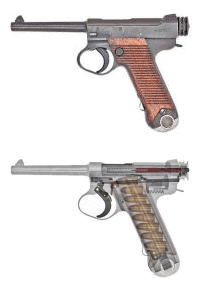
Join Date: Feb 2009
Location: ...on the 'ol Erie Canal...
Posts: 8,208
Thanks: 1,425
Thanked 4,474 Times in 2,343 Posts
|
Quote:

__________________
I like my coffee the way I like my women... ...Cold and bitter... 
|
|
|
|
|
| The following member says Thank You to sheepherder for your post: |
|
06-21-2012, 06:41 PM
|
#12 |
|
Twice a Lifer
Lifetime Forum Patron 
Join Date: Mar 2011
Location: Atop the highest hill in Schuyler County NY
Posts: 3,409
Thanks: 7,583
Thanked 2,657 Times in 1,398 Posts
|
Richard,
I've bought a few Ermas recently and have a fairly comprehensive collection of examples of the "Luger Wannabe" style models. (La.22, Ep.22, Et.22, KGP69[a .22], and KGP69a--which is a .380. I also have one of the post war .22 conversion kits installed in my Mauser 29/70.) Over the past months, I've been experimenting and working with these. I've replaced springs in most of them, along with several front toggle links that have broken--this on account of using ammo that was too hot--during attempts to find the ammo format they work best with. Their reputation is sort of polarized in that some consider them worthless junk, others have examples that shoot just about any ammo and have never failed. I'm somewhere in the middle and think that though there are shortcomings in design and potential function, they can be set up to work fairly well until the springs need to be replaced. The Ep/Et/La series is the one that breaks their Zamak toggle parts because overpowered loads will hyper-extend the "decorative" toggle action, hammering the breech block against the rear toggle link, and forcing the upper corners of the rear of the breech block to become pivot points in the resultant tearing of the ears from the front toggle link. If you're going to buy and shoot one of these, start with fresh springs from Bob's Gun Parts ($25 for complete set) and sub-sonic ammo, working your way up in f/sec rating until the load gives proper energy to functioning of the action. (40 gr. round nose) Also, the mag lips must be just so to feed correctly. Do a search of the forum for these threads, in which lots of this has been discussed; too lengthy to describe all over again here, but will tell all I know if specifically asked. The KGP's are better mechanically and metallurgically. Granted, their frames are still Zamak, but interaction between them and the steel upper only occurs when assembling or dismantling the pistol. All the upper and action in these is steel. These are the best behaved of my lot, particularly the .380, which makes as big a bark when it goes off as it is cute--the smallest of the Luger Lookalikes. David Parker |
|
|
|
|
06-22-2012, 08:56 AM
|
#13 | |
|
Lifer
Lifetime Forum Patron
Join Date: Feb 2009
Location: ...on the 'ol Erie Canal...
Posts: 8,208
Thanks: 1,425
Thanked 4,474 Times in 2,343 Posts
|
Quote:
From Wikipedia, the free encyclopedia Zamak (formerly trademarked as ZAMAK[1] and also known as Zamac) is a family of alloys with a base metal of zinc and alloying elements of aluminium, magnesium and copper. Zamak alloys are part of the zinc aluminium alloy family; they are distinguished from the other ZA alloys because of their constant 4% aluminium composition.[2] The name zamak is an acronym of the German names for the metals of which the alloys are composed: Zink (zinc), Aluminium, Magnesium and Kupfer (copper).[2] The New Jersey Zinc Company developed zamak alloys in 1929. While zinc alloys are popularly referred to as pot metal or white metal, zamak is held to higher industrial standards. (Pic, L to R: steel, brass, Zamak)
__________________
I like my coffee the way I like my women... ...Cold and bitter...
|
|
|
|
|
| The following member says Thank You to sheepherder for your post: |
|
06-23-2012, 06:33 PM
|
#14 |
|
User
Join Date: Apr 2012
Location: Atlanta, GA
Posts: 293
Thanks: 112
Thanked 58 Times in 35 Posts
|
David,
No I was not going to buy one. I saw one and the dealer was selling it for as much as a 1939 P.08 that was in collectible condition, all matching, a little wear but a very honest and I thought desirable piece. When I said that I thought he was way too high on the Luger, he said he would make me a good deal on the ERMA, which he had at the same price. I declined. What totally convinced me to pass on this guy, was that he was trying to get $700.00 for a 1916 P.08 holster that was in "good" condition but really nothing special. I bought an excellent one from Scotty Benedict for 1/2 that.  So that is why I was asking. The way he spoke, an ERMA was a "special" Luger and very rare. I also became suspicious when he could not tell me what ERMA meant. Postino, thanks for clarifying for me that an ERMA is not even a Luger. Richard.
__________________
"Für Gott, Kaiser, und Vaterland" -seeking: Erfrut Mag 1229 (no script) |
|
|
|
|
06-24-2012, 11:57 AM
|
#15 | |
|
User

Join Date: Feb 2010
Location: Tennessee
Posts: 1,149
Thanks: 159
Thanked 664 Times in 318 Posts
|
Quote:

|
|
|
|
|
|
06-24-2012, 01:33 PM
|
#16 | |
|
Lifer
Lifetime Forum Patron
Join Date: Feb 2009
Location: ...on the 'ol Erie Canal...
Posts: 8,208
Thanks: 1,425
Thanked 4,474 Times in 2,343 Posts
|
Quote:
I would consider the ERMA to be on a par with AirSoft replicas, and about comparable price-wise... 
__________________
I like my coffee the way I like my women... ...Cold and bitter...
|
|
|
|
|
|
06-25-2012, 07:07 PM
|
#17 |
|
User
Join Date: Apr 2012
Location: Atlanta, GA
Posts: 293
Thanks: 112
Thanked 58 Times in 35 Posts
|
I totally agree on the DWM vs Erfurt valuation.
Even for the war period 1914-18, I think DWM production outstripped Erfurt production, making Erfurts more rare and, therefore, if in that same or comparable condition, more desirable. Then there's those wonderful proof marks! To me, there is a real sense of history with the Erfurts. An Imperial Arsenal making weapons, with proof stamps galore, for a soon to be fallen Empire. I wax nostalgic (tear in the eye); can you not but here the dimming strands of "Deutschland über alles?"
__________________
"Für Gott, Kaiser, und Vaterland" -seeking: Erfrut Mag 1229 (no script) |
|
|
|
 |
| Thread Tools | |
| Display Modes | |
|
|


 Linear Mode

