
The cups were lined with red dyed parchment or "gut".
Geeze George! I thought we had covered this pretty thouroughly and I had learned you better!
Parchment is common paper made of sheeps skin. I don't know what gut is but the inside of an Artillery boot it is not.
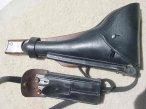
The Germans employed an ancient method inside an Artillery boot. This material is actually rawhide. It is leather that has had hair and inner layers of meat or fat removed and remains untanned.
Being untanned this material reacts very differently, drying to a translucent almost hard plastic consistancy.
The ancient Indians used this method in the bottom of their arrow quivers to prevent the ultra sharp obsidian arrow points from penetrating the bottoms.
It has always been a mystery to me as to why the Germans thought it was necessary in an Artillery boot. Seems like overkill.
I would suspect it was colored red as a michurochrome microbe killer. Since it is not tanned or treated but rawhide, it would stand to reason they used the same method they used on early WW1 linen thread to keep away microscopic bugs from rotting it or making it smell when wet.
This becomes a very tough liner in the Artillery boot for the stock iron. Like a cup. It was molded as a whole piece and if you look closely you will see some wrinkles where it bunches together.
Now you know!
Jerry Burney
__________________
Jerry Burney
11491 S. Guadalupe Drive
Yuma AZ 85367-6182
l ugerholsterrepair@earthlink.net
928 342-7583 (CO & AZ) Year Round
719 207-3331 (cell)
"For those who Fight For It, Life has a flavor the protected will never know."
|